
ความสัมพันธ์ของผลการตรวจวิเคราะห์แบคทีเรียในปัสสาวะจากเครื่อง Sysmex UF-5000 กับผลการเพาะเชื้อปัสสาวะในโรงพยาบาลนราธิวาสราชนครินทร์
คำสำคัญ:
Sysmex UF-5000, การเพาะเชื้อจากปัสสาวะ, การติดเชื้อทางเดินปัสสาวะบทคัดย่อ
บทนำ: การตรวจวิเคราะห์แบคทีเรียในปัสสาวะ ช่วยในการวินิจฉัยโรคติดเชื้อทางเดินปัสสาวะ (Urinary Tract infection) ซึ่งเป็นโรคติดเชื้อที่เกิดขึ้นบ่อยที่สุดต้องอาศัยผู้ปฏิบัติงานที่มความรู้ ความชำนาญ อีกทั้งใช้เวลานานในการตรวจวิเคราะห์
วัตถุประสงค์: เพื่อความสัมพันธ์ระหว่างผลการตรวจวิเคราะห์แบคทีเรียในปัสสาวะ (Urine Examination) ด้วยเครื่อง Sysmex UF-5000 กับผลการเพาะเชื้อแบคทีเรียในปัสสาวะ (Urine culture)
วิธีวิจัย: การวิจัยเชิงพรรณนาแบบย้อนหลัง กลุ่มตัวอย่างที่มีระดับแบคทีเรียในปัสสาวะตั้งแต่ระดับ Moderate จนถึง Numerous และมีผลการเพาะเชื้อร่วมด้วยของโรงพยาบาลนราธิวาสราชนครินทร์ จำนวน 450 ราย ใช้วิธีสุ่มอย่างง่าย วิเคราะห์ข้อมูลโดยใช้สถิติเชิงพรรณนา และสถิติ Spearman's rank correlation
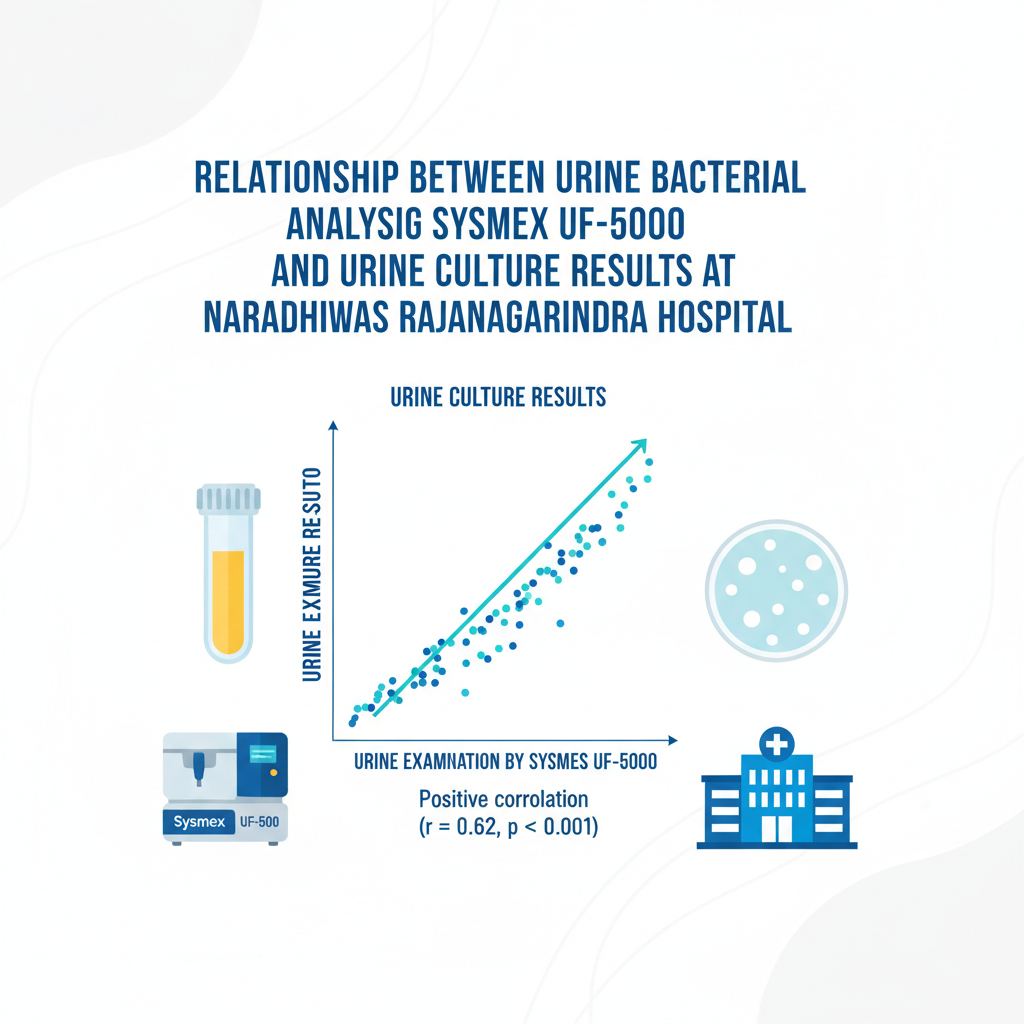
ผลวิจัย: พบว่าการตรวจวิเคราะห์แบคทีเรียในปัสสาวะ (Urine examination) ด้วยเครื่อง Sysmex UF-5000 กับผลการเพาะเชื้อแบคทีเรียในปัสสาวะ (Urine culture) มีความสัมพันธ์ทางบวกในระดับปานกลางกันอย่างมีนัยสำคัญทางสถิติที่ระดับ .001 (r = .62)
สรุป: ผลการวิจัยชี้ว่าเครื่อง Sysmex UF-5000 สามารถใช้เป็นเครื่องมือคัดกรองเบื้องต้นที่มีประสิทธิภาพสำหรับการติดเชื้อทางเดินปัสสาวะโดยเฉพาะในสภาวะที่ต้องการผลด่วนและลดจำนวนการเพาะเชื้อที่ไม่จำเป็น ซึ่งสอดคล้องกับผลการศึกษาก่อนหน้า ทั้งนี้ควรพิจารณาใช้ระดับเชื้อที่ตรวจพบใน Urine Examination และข้อมูลจาก Scattergram เป็นปัจจัยสนับสนุนการตัดสินใจทางคลินิก
เอกสารอ้างอิง
ชูศรี วงศ์รัตนะ. (2553). เทคนิคการใช้สถิติเพื่อการวิจัย (พิมพ์ครั้งที่ 12). ฐานบัณฑิตจำกัด.
De Rosa, R., Grosso, S., Lorenzi, G., Bruschetta, G., & Camporese, A. (2018). Evaluation of the new Sysmex UF-5000 fluorescence flow cytometry analyser for ruling out bacterial urinary tract infection and for prediction of Gram negative bacteria in urine cultures. Clinica Chimica Acta, 484, 171–178. https://doi.org/10.1016/j.cca.2018.05.047
Enko D, Stelzer I, Böckl M, Schnedl WJ, Meinitzer A, Herrmann M, Tötsch M, Gehrer M. Comparison of the reliability of Gram-negative and Gram-positive flags of the Sysmex UF-5000 with manual Gram stain and urine culture results. Clin Chem Lab Med. 59(3) 619-624. doi: 10.1515/cclm-2020-1263. PMID: 33068381.
MedCalc Sofware Ltd, Ostend, Belgiu. (2024). MedCalc's free statistical calculators Retrieved May 11, 2026 from https://www.medcalc.org
Mugadza, D. T., Moyo, M. R., & Matema, A. (2024). Prevalence and antimicrobial resistance patterns of uropathogens causing urinary tract infections: A cross-sectional study. Open Journal of Medical Microbiology, 14(2), 123–132. https://doi.org/10.4236/ojmm.2024.142010
Nicolle, L. E. (2002). The etiology of urinary tract infection: traditional and emerging pathogens. The American Journal of Medicine, 113(1), 14–19. https://doi.org/10.1016/S0002-9343(02)01055-0
Smith, J. A., & Lee, M. T. (2024). Urinary tract infections in older adults: Clinical significance and management strategies. American Journal of Kidney Diseases, 83(2), 215–222. https://www.ajkd.org
Szlachta-McGinn, A., Douglass, K. M., Chung, U. Y. R., Jackson, N. J., Nickel, J. C., & Ackerman, A. L. (2022). Molecular Diagnostic Methods Versus Conventional Urine Culture for Diagnosis and Treatment of Urinary Tract Infection: A Systematic Review and Meta-analysis. European urology open science, 44, 113–124. https://doi.org/10.1016/j.euros.2022.08.009
Uqora. (n.d.). Leukocytes and nitrites in urine: How do they factor in a UTI diagnosis? Retrieved June 3, 2025, from https://uqora.com/products/uqora-for-men
ดาวน์โหลด
เผยแพร่แล้ว
รูปแบบการอ้างอิง
ฉบับ
ประเภทบทความ
สัญญาอนุญาต
ลิขสิทธิ์ (c) 2026 วารสารความหลากหลายทางสุขภาพ

อนุญาตภายใต้เงื่อนไข Creative Commons Attribution-NonCommercial-NoDerivatives 4.0 International License.
บทความในวารสารนี้เป็นลิขสิทธิ์ของ วารสารความหลากหลายทางสุขภาพ</strong> เผยแพร่ภายใต้สัญญาอนุญาต Creative Commons Attribution-NonCommercial-NoDerivatives 4.0 International (CC BY-NC-ND 4.0)
สามารถอ่านและใช้เพื่อวัตถุประสงค์ทางวิชาการ เช่น การสอน การวิจัย หรือการอ้างอิง โดยต้องให้เครดิตอย่างเหมาะสมแก่ผู้เขียนและวารสาร
การใช้งานหรือการดัดแปลงบทความโดยไม่ได้รับอนุญาตเป็นสิ่งต้องห้าม
ข้อความที่แสดงในบทความเป็นความคิดเห็นของผู้เขียนแต่เพียงผู้เดียว
ผู้เขียนมีความรับผิดชอบเต็มที่ต่อเนื้อหาและความถูกต้องของบทความของตน
การนำไปใช้ซ้ำหรือเผยแพร่ซ้ำในที่อื่นใดต้องได้รับอนุญาตจากวารสาร


