ความต้องการใช้เครื่องมือแพทย์ในผู้ป่วยเบาหวานเพื่อบรรลุเบาหวานระยะสงบ: กรณีศึกษา อำเภอบ้านตาขุน จังหวัดสุราษฎร์ธานี
คำสำคัญ:
ความต้องการใช้เครื่องมือแพทย์ , ผู้ป่วยเบาหวาน, สุขภาพดิจิทัล , เบาหวานระยะสงบบทคัดย่อ
การวิจัยเชิงคุณภาพนี้มีวัตถุประสงค์เพื่อศึกษาความต้องการใช้เครื่องมือแพทย์ เพื่อบรรลุเบาหวานระยะสงบของผู้ป่วยเบาหวาน อ.บ้านตาขุน จ.สุราษฎร์ธานี ผู้ให้ข้อมูล 15 คน ประกอบด้วย ผู้ที่ได้รับ
การวินิจฉัยว่าเป็นเบาหวานชนิดที่ 2 จำนวน 5 คน ญาติผู้ดูแล 4 ราย แพทย์ประจำคลินิกเบาหวาน 1 คน พยาบาล 3 คน นักโภชนากร 1 คนและเจ้าหน้าที่ดูแลระบบคอมพิวเตอร์ 1 คน เครื่องมือที่ใช้ในการวิจัย
คือแบบสัมภาษณ์เชิงลึก การสังเกต จดบันทึกภาคสนาม และการบันทึกเทป วิเคราะห์ข้อมูลโดยการวิเคราะห์เนื้อหาเชิงลึก (Content Analysis) มีการตรวจสอบคุณภาพภายนอก จากผู้เชี่ยวชาญในการดูแลผู้ป่วยเบาหวาน 3 ท่าน เพื่อยืนยันความสม่ำเสมอและความเหมาะสมของการวิจัย ผลการวิจัยพบว่า
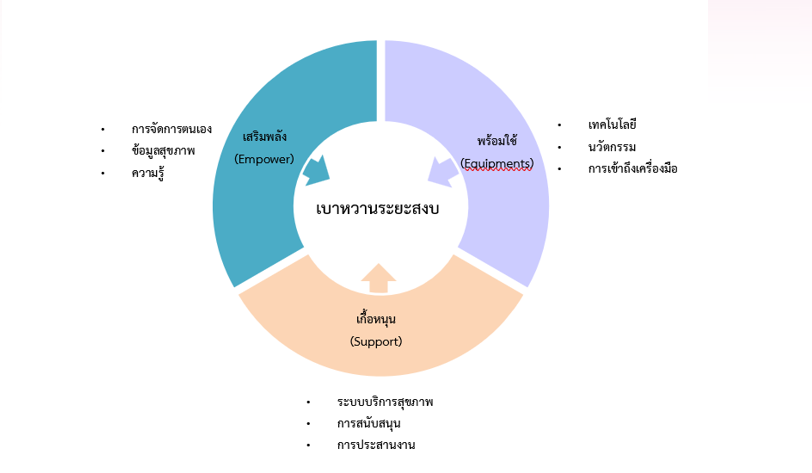
ผู้ให้ข้อมูลมีความต้องการใช้เครื่องมือทางการแพทย์เพื่อบรรลุเบาหวานระยะสงบ ออกเป็น 3 ประเด็น ได้แก่ 1) การเสริมพลัง ประกอบด้วย 3 ประเด็นย่อย คือ ต้องการจัดการตนเอง ข้อมูลสุขภาพ ความรู้ 2) เครื่องมือที่พร้อมใช้งาน ประกอบด้วย 3 ประเด็นย่อย คือ เทคโนโลยี นวัตกรรม การเข้าถึงเครื่องมือ 3) ระบบเกื้อหนุน ประกอบด้วย 3 ประเด็นย่อย คือ ระบบบริการสุขภาพ การสนับสนุน การประสานงาน ผลการวิจัยสะท้อนให้เห็นถึงการเปลี่ยนแปลงกระบวนทัศน์จากการมองผู้ป่วยเป็นผู้รับบริการเป็นหลักไปสู่การเป็นหุ้นส่วนที่มีบทบาทเชิงรุกในการจัดการสุขภาพของตนเอง และความต้องการเหล่านี้ แสดงให้เห็นว่าเครื่องมือแพทย์ในบริบทของการบรรลุเบาหวานระยะสงบไม่เพียงแต่เป็นอุปกรณ์วัดและบันทึก แต่ต้องเป็นตัวกลางสำคัญในการเสริมพลังที่ช่วยให้ผู้ป่วยสามารถพัฒนาความสามารถ ความมั่นใจ และแรงจูงใจในการจัดการตนเองได้อย่างมีประสิทธิภาพ โดยต้องมีการสนับสนุนจากระบบสุขภาพที่เอื้อต่อการใช้งานและการเข้าถึงเทคโนโลยีที่เหมาะสม
ควรศึกษาแนวทางการพัฒนาระบบสนับสนุนดิจิทัลและการบูรณาการบริการที่ลดช่องว่างการเข้าถึงและเพิ่มทักษะการใช้เครื่องมือทางการแพทย์สำหรับผู้ป่วยเบาหวานอย่างยั่งยืน
เอกสารอ้างอิง
สมาคมเบาหวานแห่งประเทศไทย. (2566). แนวทางเวชปฏิบัติสำหรับโรคเบาหวาน ประจำปี 2566. กรุงเทพฯ: สมาคมเบาหวานแห่งประเทศไทย
Alcántara-Aragón V. (2019). Improving patient self-care using diabetes technologies. Ther Adv Endocrinol Metab. doi: 10.1177/2042018818824215.
Bandura, A. (1997). Self-efficacy: The exercise of control. New York: W.H. Freeman. Baig, A. A., Benitez, A., Quinn, M. T., & Burnet, D. L. (2015). Family interventions to improve diabetes outcomes for adults. Annals of the New York Academy of Sciences, 1353(1), 89–112. https://doi.org/10.1111/nyas.12844.
Creswell, J. W. (2018). Research design: Qualitative, quantitative, and mixed methods approaches (5th ed.). Thousand Oaks, CA: SAGE Publications.
Epstein, R. M., & Street, R. L. (2011). The values and value of patient-centered care. Annals of Family Medicine, 9(2), 100–103. https://doi.org/10.1370/afm.1239
Funnell, M. M., & Anderson, R. M. (2004). Empowerment and self-management of diabetes. Clinical Diabetes, 22(3), 123–127. https://doi.org/10.2337/diaclin.22.3.123
Fisher, E. B., Thorpe, C. T., DeVellis, B. M., & DeVellis, R. F. (2005). Healthy coping, negative emotions, and diabetes management: A systematic review and appraisal. The Diabetes Educator, 33(6), 1080–1103. https://doi.org/10.1177/0145721707309808.
Glasgow, R. E., Davis, C. L., Funnell, M. M., & Beck, A. (2001). Implementing practical interventions to support chronic illness self-management. Joint Commission Journal on Quality and Patient Safety, 27(11), 575–584.
Greenwood, D. A., Gee, P. M., Fatkin, K. J., & Peeples, M. (2017). A systematic review of reviews evaluating technology-enabled diabetes self-management education and support. Journal of Diabetes Science and Technology, 11(5), 1015–1027. https://doi.org/10.1177/1932296817713506
Hou, C., Xu, Q., Diao, S., & Hewitt, J. (2018). Mobile phone applications and self-management of diabetes: A systematic review with meta-analysis, meta-regression of 21 randomized trials. JMIR mHealth and uHealth, 6(12), e12297. https://doi.org/10.2196/12297
International Diabetes Federation. (2022). IDF Diabetes Atlas (10th ed.). Retrieved from https://diabetesatlas.org.
Lincoln, Y. S., & Guba, E. G. (1985). Naturalistic inquiry. Sage Publications.
Ouwens, M., Wollersheim, H., Hermens, R., Hulscher, M., & Grol, R. (2005). Integrated care programmes for chronically ill patients: A review of systematic reviews. International Journal for Quality in Health Care, 17(2), 141–146. https://doi.org/10.1093/intqhc/mzi016
Powers, M. A., Bardsley, J., Cypress, M., Duker, P., Funnell, M. M., Fischl, A. H., ... & Vivian, E. (2009). Diabetes self-management education and support in type 2 diabetes. The Diabetes Educator, 35(Suppl 3), 85S–107S. https://doi.org/10.1177/0145721709331946.
U.S. Department of Health and Human Services. (2022). Electronic health records and telehealth adoption increase to reduce hospital burden. Retrieved from https://www.hhs.gov.
UNICEF. (2022). Ireland harnesses health technology to reach 2.5 billion people, including elderly and persons with disabilities. Retrieved from https://www.unicef.org. World Health Organization. (2021). Diabetes. Retrieved from https://www.who.int/news-room/fact-sheets/detail/diabetes.
ดาวน์โหลด
เผยแพร่แล้ว
รูปแบบการอ้างอิง
ฉบับ
ประเภทบทความ
สัญญาอนุญาต
ลิขสิทธิ์ (c) 2025 วารสารสมาคมนวัตกรรมการพยาบาลและสุขภาพ

อนุญาตภายใต้เงื่อนไข Creative Commons Attribution-NonCommercial-NoDerivatives 4.0 International License.


