ปัจจัยทางการบริหารที่มีผลต่อการปฏิบัติงานเฝ้าระวัง ป้องกัน และควบคุมโรคไข้เลือดออกของผู้นำในชุมชน อำเภอช้างกลาง จังหวัดนครศรีธรรมราช
คำสำคัญ:
ปัจจัยทางการบริหาร , ผู้นำชุมชน , โรคไข้เลือดออกบทคัดย่อ
การวิจัยแบบภาคตัดขวางนี้มีวัตถุประสงค์เพื่อศึกษา 1) ระดับการปฏิบัติงานเฝ้าระวัง ป้องกัน และควบคุมโรคไข้เลือดออก และ 2) ปัจจัยที่มีผลต่อการปฏิบัติงานเฝ้าระวัง ป้องกัน และควบคุมโรคไข้เลือดออกของผู้นำในชุมชน อำเภอช้างกลาง จังหวัดนครศรีธรรมราช ประชากร คือ ผู้นำในชุมชน จำนวน 240 คน คำนวณกลุ่มตัวอย่างได้ 176 คน เก็บรวบรวมข้อมูลระหว่างวันที่ 1 – 30 เมษายน 2568 คัดเลือกโดยใช้วิธีสุ่มอย่างง่าย เครื่องมือที่ใช้เป็นแบบสอบถาม ผ่านผู้ทรงคุณวุฒิ 3 ท่าน มีค่าความสอดคล้องระหว่าง .67 – 1.00 ได้ค่าสัมประสิทธิ์แอลฟาของครอนบาค ดังนี้ ปัจจัยทางการบริหาร เท่ากับ .97 และการปฏิบัติงานการเฝ้าระวัง ป้องกัน และควบคุมโรคไข้เลือดออก เท่ากับ .96 วิเคราะห์ข้อมูลโดยใช้สถิติเชิงพรรณนา และสถิติถดถอยแบบขั้นตอน ผลการวิจัยพบว่า
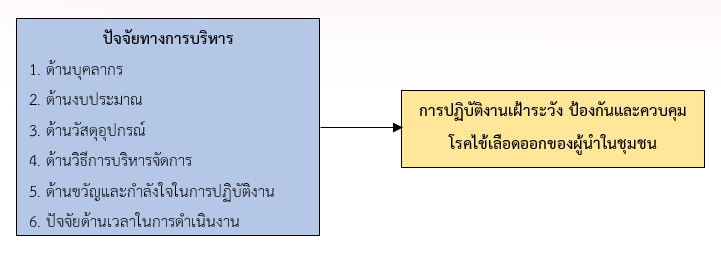
1. ปัจจัยทางการบริหารในภาพรวมอยู่ในระดับปานกลางเมื่อพิจารณาเป็นรายด้าน พบว่า ปัจจัยด้านบุคลากรและปัจจัยด้านขวัญกำลังใจในการปฏิบัติงานอยู่ในระดับมาก สำหรับปัจจัยด้านเวลาในการดำเนินงาน ปัจจัยด้านวิธีการบริหารจัดการ ปัจจัยด้านวัสดุอุปกรณ์ และปัจจัยด้านงบประมาณอยู่ในระดับปานกลาง การปฏิบัติงานเฝ้าระวัง ป้องกัน และควบคุมโรคไข้เลือดออกในภาพรวมอยู่ในระดับมาก และทุกด้านอยู่ในระดับมาก
2. ปัจจัยที่ส่งผลต่อการปฏิบัติงานเฝ้าระวัง ป้องกัน และควบคุมโรคไข้เลือดออก ได้แก่ ปัจจัยด้านเวลาในการดำเนินงาน ปัจจัยด้านบุคลากร ปัจจัยด้านขวัญกำลังใจในการปฏิบัติงาน และปัจจัยด้านวิธีการบริหารจัดการ สามารถร่วมกันทำนายได้ร้อยละ 75.1 (adjR2=.751)
ฉะนั้น ควรสนับสนุนปัจจัยด้านบุคลากร และปัจจัยด้านขวัญกำลังใจในการปฏิบัติงานแก่ผู้นำชุมชน และส่งเสริมด้านเวลาในการดำเนินงาน ด้านวิธีการบริหารจัดการ ด้านวัสดุอุปกรณ์ และด้านงบประมาณให้ผู้นำในชุมชนรับทราบกระบวน นโยบาย และสนับสนุนให้มีส่วนร่วมในทุกขั้นตอน
เอกสารอ้างอิง
กรมควบคุมโรค กระทรวงสาธารณสุข. (2565). ยุทธศาสตร์การจัดการโรคติดต่อนำโดยแมลง พ.ศ. 2566 – 2575. นนทบุรี: สำนักพิมพ์อักษรกราฟฟิคแอนด์ดีไซน์.
กรมควบคุมโรค กระทรวงสาธารณสุข. (2567). สถานการณ์โรคไข้เลือดออกในประเทศไทย. สืบค้นเมื่อ 19 มกราคม 2567, จาก https://ddc.moph.go.th/brc/news.php?deptcode=brc&news=40542
กิ่งแก้ว สำรวยรื่น, & นิธิพงศ์ ศรีเบญจมาศ. (2564). ปัจจัยทำนายพฤติกรรมป้องกันและควบคุมโรคไข้เลือดออกของประชาชน ตำบลปากโทก อำเภอเมือง จังหวัดพิษณุโลก. วารสารวิชาการมหาวิทยาลัยอีสเทิร์นเอเชีย ฉบับวิทยาศาสตร์และเทคโนโลยี, 16(1), 78–88.
ฉวีวรรณ จันทรักษ์. (2567). ปัจจัยทางการบริหารที่มีความสัมพันธ์กับการป้องกันและควบคุมโรคไข้เลือดออกของอาสาสมัครสาธารณสุขประจำหมู่บ้าน โรงพยาบาลส่งเสริมสุขภาพตำบลบ้านโนนแต้ ตำบลท่าสองคอน อำเภอเมือง จังหวัดมหาสารคาม. วารสารวิชาการสำนักงานสาธารณสุขจังหวัดมหาสารคาม, 8(16), 97-113.
ชาญณรงค์ นัยเนตร และประจักร บัวผัน. (2566). ปัจจัยทางการบริหารและปัจจัยแห่งความสำเร็จที่มีผลต่อการปฏิบัติงานป้องกันและควบคุมโรคติดเชื้อไวรัสโคโรนา 2019 (โควิด 19) ของเจ้าหน้าที่สาธารณสุขในโรงพยาบาลส่งเสริมสุขภาพตำบล จังหวัดหนองบัวลำภู. วารสารวิจัย มข. (ฉบับบัณฑิตศึกษา), 23(2), 211-223.
ประจักร บัวผัน. (2552). หลักการบริหารงานสาธารณสุข. ขอนแก่น: โรงพิมพ์มหาวิทยาลัยขอนแก่น. พริษฐ์ พลเยี่ยม, & ประจักร บัวผัน. (2566). ความรอบรู้ด้านสุขภาพและปัจจัยทางการบริหารที่มีผลต่อการป้องกันและควบคุมโรคไข้เลือดออกของอาสาสมัครสาธารณสุขประจำหมู่บ้าน จังหวัดร้อยเอ็ด. วารสารวิทยาศาสตร์สุขภาพและการสาธารณสุขชุมชน, 6(2), 25-39.
พัทธ์ธีรา พลีดี, ประจักร บัวผัน และสุวิทย์ อุดมพาณิชย์. (2567). คุณลักษณะส่วนบุคคลและปัจจัยทางการบริหารที่มีผลต่อการดำเนินงานป้องกัน และควบคุมโรคไข้เลือดออกของอาสาสมัครสาธารณสุขประจำหมู่บ้าน อำเภอชุมพวง จังหวัดนครราชสีมา. วารสารวิชาการสำนักงานป้องกันควบคุมโรคที่ 9 จังหวัดนครราชสีมา, 30(1), 5-20.
วิรัลวิชญ์ รู้ยิ่ง. (2564). ปัจจัยทางการบริหารที่มีความสัมพันธ์กับการปฏิบัติงานเฝ้าระวัง ป้องกัน และควบคุมโรคไข้เลือดออกของผู้นำในชุมชน อำเภอพรหมคีรี จังหวัดนครศรีธรรมราช. วารสารศาสตร์สุขภาพและการศึกษา, 1(3), 1–15.
สุกันยา พิลาตัน และสุรชัย พิมหา. (2567). บรรยากาศองค์การและปัจจัยทางการบริหารที่มีผลต่อการปฏิบัติงานเฝ้าระวังสอบสวนเคลื่อนที่เร็ว (SRRT) ของเจ้าหน้าที่สาธารณสุขในโรงพยาบาลส่งเสริมสุขภาพตาบล จังหวัดอุดรธานี. วารสารโรงพยาบาลมหาสารคาม, 21, ฉบับพิเศษ, 26-38.
สำนักงานสาธารณสุขจังหวัดนครศรีธรรมราช. (2567). รายงานระบาดวิทยาจังหวัดนครศรีธรรมราช. กระทรวงสาธารณสุข. ศูนย์ระบาดวิทยาอำเภอช้างกลาง. (2567). ข้อมูลการระบาดของโรคอำเภอช้างกลาง. นครศรีธรรมราช.
Best, J .W. & Kahn, J. V. (1998). Research in education (8th ed.). Boston: Allyn and Bacon Cohen, J. (1988). Statistical power analysis for the behavioral sciences. (2nd). Hillsdale, NJ: Lawrence Erlbaum Associates, Publishers.
Faul, F., Erdfelder, E., Lang, A. G., & Buchner, A. (2007). G*Power 3: A flexible statistical power analysis program for the social, behavioral, and biomedical sciences. Behavior Research Methods, 39(2), 175-191.
Likert, R. (1967). The Human Organization: Its Management and Value. New York: McGraw-Hill.
ดาวน์โหลด
เผยแพร่แล้ว
รูปแบบการอ้างอิง
ฉบับ
ประเภทบทความ
สัญญาอนุญาต
ลิขสิทธิ์ (c) 2025 วารสารสมาคมนวัตกรรมการพยาบาลและสุขภาพ

อนุญาตภายใต้เงื่อนไข Creative Commons Attribution-NonCommercial-NoDerivatives 4.0 International License.


