
Long Term Outcome for Surgical Resection of Pediatric Spinal Lipoma in Kcmh: 20 Years Experience
Keywords:
Spinal lipoma, Tethered cord syndrome, Long tern outcome, Progression-free survival, Cord-sac ratioAbstract
Background: The optimal surgical approach for spinal lipoma remains controversial, particularly in asymptomatic patients. Factors contributing to an increased risk of TCS require further investigation.
Objective: This study aims to analyze the long-term outcomes of patients with spinal lipoma who underwent surgery at King Chulalongkorn Memorial Hospital and identify factors associated with an increased risk of developing TCS.
Methods: A survival analysis was conducted on pediatric patients with spinal lipoma who underwent surgery at King Chulalongkorn Memorial Hospital. Data were retrospectively reviewed for patients who underwent surgery between September 2003 and September 2023 (20 years).
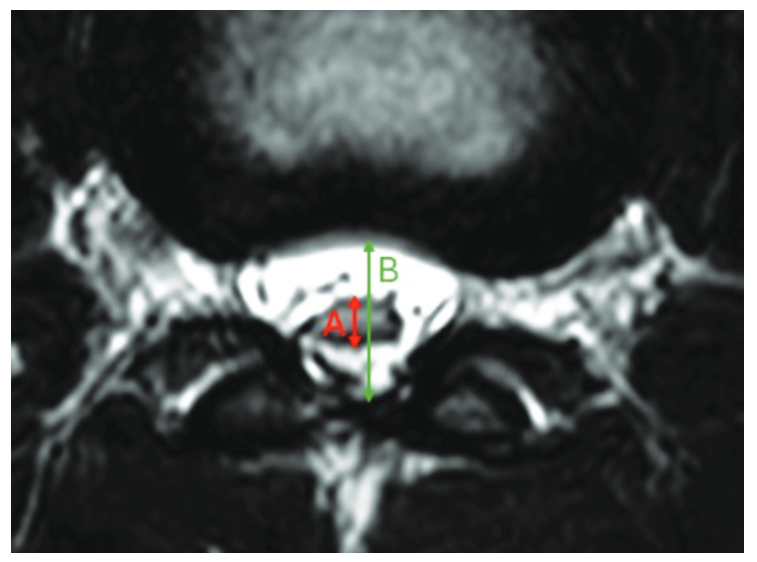
Results: Among 69 patients with a mean follow-up period of 9.6 years, the mean time to progression was 15.7 years, with a progression-free survival (PFS) rate of 84.1% at 19years. The time to retethering ranged from 2 to 17 years after the initial surgery. When analyzing risk factors for TCS, asymptomatic patients had a PFS of 86.7%, while symptomatic patients had a PFS of 79.2%, with no statistically significant difference (p = 0.519). The PFS rates for different spinal lipoma types were as follows: dorsal (50%), transitional (78.6%), chaotic (94.4%), and terminal (89.5%), with no significant difference (p = 0.157). In terms of the extent of resection, patients who underwent complete or near-total resection had a PFS of 94.7%, while those who underwent partial resection had a PFS of 77.3%, with no significant difference (p = 0.071). However, when stratified by cord-sac ratio, PFS rates were 100% for < 0.3, 92.7% for 0.3–0.5, and 50% for > 0.5, demonstrating statistical significance (p = 0.002).
Conclusion: The long-term outcomes of spinal lipoma patients who underwent surgery at King Chulalongkorn Memorial Hospital showed a PFS rate of 84.1%. The cord-sac ratio was the only significant factor associated with an increased risk of developing TCS.
Downloads
References
Morioka T, Murakami N, Shimogawa T, Mukae N, Hashiguchi K, Suzuki SO, et al. Neurosurgical management and pathology of lumbosacral lipomas with tethered cord. Neuropathology. 2017;37(5):385-92.
Blount JP, Elton S. Spinal lipomas. Neurosurg Focus. 2001;10(1):e3.
Finn MA, Walker ML. Spinal lipomas: clinical spectrum, embryology, and treatment. Neurosurg Focus. 2007;23(2):E10.
Pierre-Kahn A, Zerah M, Renier D, Cinalli G, SainteRose C, Lellouch-Tubiana A, et al. Congenital lumbosacral lipomas. Childs Nerv Syst. 1997;13(6):298- 334.
La Marca F, Grant JA, Tomita T, McLone DG. Spinal lipomas in children: outcome of 270 procedures. Pediatr Neurosurg. 1997;26(1):8-16. doi:10.1159/000121155.
Chapman P, Stieg PE, Magge S, Barnes P, Feany M. Spinal lipoma controversy. Neurosurgery. 1999;44(1):186-92. doi:10.1097/00006123-199901000-00113.
Pang D, Zovickian J, Oviedo A. Long-term outcome of total and near-total resection of spinal cord lipomas and radical reconstruction of the neural placode: Part I—surgical technique. Neurosurgery. 2009;65(3):511-29.
Pang D, Zovickian J, Oviedo A. Long-term outcome of total and near-total resection of spinal cord lipomas and radical reconstruction of the neural placode: Part II—outcome analysis and preoperative profiling. Neurosurgery. 2010;66(2):253-73.
Pang D, Zovickian J, Wong ST, Hou YJ, Moes GS. Surgical treatment of complex spinal cord lipomas. Childs Nerv Syst. 2013;29(9):1485-513.
Kulkarni HV, Pierre-Kahn A, Zerah M. Conservative management of asymptomatic spinal lipomas of the conus. Neurosurgery. 2004;54(4):868-75.
Hoffman HJ, Taecholarn C, Hendrick EB, Humphreys RP. Management of lip myelomeningoceles: experience at the Hospital for Sick Children, Toronto. J Neurosurg. 1985;62(1):1-8. doi:10.3171/jns.1985.62.1.0001.
La Marca F, Grant JA, Tomita T, McLone DG. Spinal lipomas in children: outcome of 270 procedures. Pediatr Neurosurg. 1997;26(1):8-16. doi:10.1159/000121155.
McLone DG, Mutluer S, Naidich TP. Lipomeningoceles of the conus medullaris. In: Raimondi AJ, editor. Concepts in Pediatric Neurosurgery. Vol. 3. Basel: Karger; 1983. p.170-7.
Herman JM, McLone DG, Storrs BB, Dauser RC. Analysis of 153 patients with myelomeningocele or spinal lipoma reoperated upon for a tethered cord: presentation, management and outcome. Pediatr Neurosurg. 1993;19(5):243-9. doi:10.1159/000120739.
Wykes V, Desai D, Thompson DN. Asymptomatic lumbosacral lipomas: a natural history study. Childs Nerv Syst. 2012;28(10):1731-9. doi:10.1007/s00381-012-1775-z.
Warder DE. Tethered cord syndrome and occult spinal dysraphism in children: consensus on a complex diagnosis. J Neurosurg. 2001;94(2 Suppl):1-8.
Jones V, Thompson D. Placode rotation in transitional lumbosacral lipomas: are there implications for origin and mechanism of deterioration? Childs Nerv Syst. 2018;34(8):1557-62. doi:10.1007/s00381-018-3782-1.
Nejat F, El Khashab M, Gohar M, Shafie M, ElKhashab M, Ziyal I. Predictors of retethering after primary spinal lipoma surgery: a prospective study. J Neurosurg Pediatr. 2014;13(4):451-6.
Fletcher NA, Oakes WJ. The relationship of spinal cord sac ratio to outcome after untethering operations. Pediatr Neurosurg. 1999;30(5):247-52.
Maher CO, Muraszko KM, Garton HJ, Buchman SR, Naheedy MH, Ecklund K. Surgical outcomes in tethered cord syndrome associated with spinal lipoma. Neurosurgery. 2010;66(5):980-5.
Kang JK, Lee IW, Jeun SS. Surgical treatment and outcome of spinal lipoma: experience with 68 cases. J Neurosurg Pediatr. 2000;92(1):24-30.
Downloads
Published
How to Cite
Issue
Section
License

This work is licensed under a Creative Commons Attribution-NonCommercial-NoDerivatives 4.0 International License.
Articles in this journal are copyrighted by the x may be read and used for academic purposes, such as teaching, research, or citation, with proper credit given to the author and the journal.use or modification of the articles is prohibited without permission.
statements expressed in the articles are solely the opinions of the authors.
authors are fully responsible for the content and accuracy of their articles.
other reuse or republication requires permission from the journal."


