
ผลลัพธ์ระยะยาวในการผ่าตัดก้อนไขมันเส้นประสาทไขสันหลัง ของผู้ป่วยเด็กในโรงพยาบาลจุฬาลงกรณ์ จากประสบการณ์ 20 ปี
คำสำคัญ:
Spinal lipoma, Tethered cord syndrome, Long tern outcome, Progression-free survival, Cord-sac ratioบทคัดย่อ
ความเป็นมา: ปัจจุบันแนวคิดและวิธีการผ่าตัด spinal lipoma ยังเป็นที่ถกเถียงกันโดยเฉพาะในกลุ่มผู้ป่วย spinal lipoma ที่ไม่มีอาการมีปัจจัยใดบ้างที่ทำให้เพิ่มโอกาสการเกิดไขสันหลังถูกดึงรั้ง (tethered cord syndrome) ได้
วัตถุประสงค์: เป็นการศึกษา long term outcome ในผู้ป่วย spinal lipoma ที่ได้รับการผ่าตัดในโรงพยาบาลจุฬาลงกรณ์ โดยมีจุดประสงค์เพื่อหาปัจจัยที่เพิ่มโอกาสการเกิด tethered cord syndrome
วิธีการศึกษา: เป็นการศึกษา survival analysis โดยเก็บข้อมูลผู้ป่วยเด็กโรคก้อนไขมันเส้นประสาทไขสันหลัง ที่ได้รับการผ่าตัดในโรงพยาบาลจุฬาลงกรณ์ รวบรวมข้อมูลในเด็กที่ผ่าตัดตั้งแต่เดือน กันยายน 2546 - กันยายน 2566 (20 ปี) ซึ่งเป็นการเก็บข้อมูลจากการทบทวนเวชระเบียนย้อนหลัง
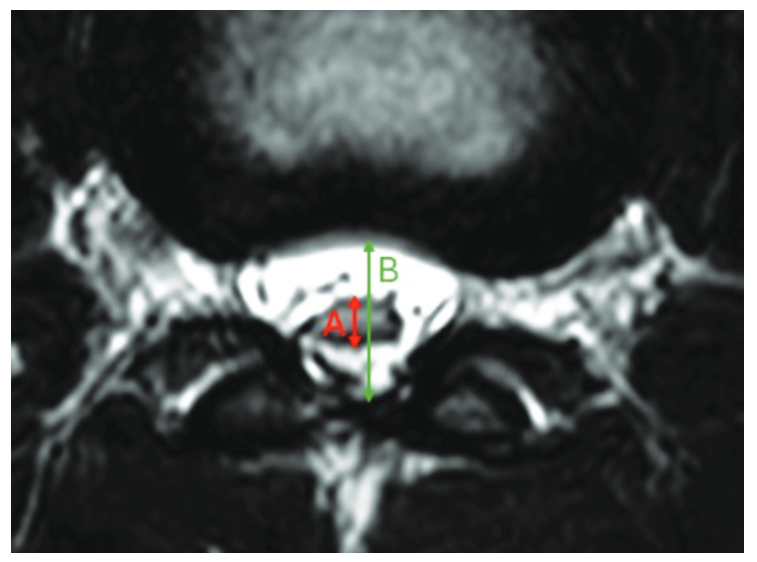
ผลการศึกษา: จากประชากรทั้งหมด 69 คน ใน mean follow up time 9.6 ปี พบว่า มีค่าเฉลี่ยสำหรับเวลาก่อนที่จะเกิดเหตุการณ์อยู่ที่ 15.7 ปี และมี progression-free survival (PFS) ที่ 19 ปีอยู่ที่ 84.1% โดยมีช่วงเวลาการเกิด retethering ตั้งแต่ 2 ปี ไปจนถึง 17 ปีหลังการผ่าตัดครั้งแรก เมื่อแบ่งกลุ่มย่อยเพื่อศึกษาปัจจัยที่ส่งผลต่ออัตราการเกิด tethered cord syndrome พบว่า กลุ่มที่ไม่มีอาการก่อนผ่าตัดมี PFS อยู่ที่ 86.7% และในกลุ่มที่มี อาการมี PFS อยู่ที่ 79.2% ไม่มีความแตกต่างอย่างมีนัยสำคัญในทางสถิติ (p value = 0.519) ประเภทของ spinal lipoma กลุ่ม dorsal มี PFS อยู่ที่ 50% กลุ่ม transitional มี PFS อยู่ที่ 78.6% กลุ่ม chaotic มี PFS อยู่ที่ 94.4% กลุ่ม terminal มี PFS อยู่ที่ 89.5% ไม่มีความแตกต่างอย่างมีนัยสำคัญทางสถิติ (p value = 0.157) extent of resection ในกลุ่ม complete หรือ near total resection มี PFS อยู่ที่ 94.7% และในกลุ่ม partial resection มี PFS อยู่ที่ 77.3% ซึ่งไม่พบว่ามีความแตกต่างอย่างมีนัยสำคัญทางสถิติ (p value = 0.071) แบ่งกลุ่ม cord-sac ratio < 0.3, 0.3-0.5 และ > 0.5 ซึ่งมี PFS อยู่ที่ 100%, 92.7%, และ 50% ตามลำดับ ซึ่งเป็นปัจจัยเดียวในการศึกษานี้ที่พบว่ามีนัยสำคัญทางสถิติ (P value = 0.002)
สรุป: จากการศึกษา long term outcome ในผู้ป่วย spinal lipoma ที่ได้รับการผ่าตัดในโรงพยาบาลจุฬาลงกรณ์ พบว่าผู้ป่วยมี progression free survival อยู่ที่ 84.1% โดยปัจจัยที่ส่งผลต่ออัตราการเกิด tethered cord syndrome คือ cord-sac ratio
Downloads
เอกสารอ้างอิง
Morioka T, Murakami N, Shimogawa T, Mukae N, Hashiguchi K, Suzuki SO, et al. Neurosurgical management and pathology of lumbosacral lipomas with tethered cord. Neuropathology. 2017;37(5):385-92.
Blount JP, Elton S. Spinal lipomas. Neurosurg Focus. 2001;10(1):e3.
Finn MA, Walker ML. Spinal lipomas: clinical spectrum, embryology, and treatment. Neurosurg Focus. 2007;23(2):E10.
Pierre-Kahn A, Zerah M, Renier D, Cinalli G, SainteRose C, Lellouch-Tubiana A, et al. Congenital lumbosacral lipomas. Childs Nerv Syst. 1997;13(6):298- 334.
La Marca F, Grant JA, Tomita T, McLone DG. Spinal lipomas in children: outcome of 270 procedures. Pediatr Neurosurg. 1997;26(1):8-16. doi:10.1159/000121155.
Chapman P, Stieg PE, Magge S, Barnes P, Feany M. Spinal lipoma controversy. Neurosurgery. 1999;44(1):186-92. doi:10.1097/00006123-199901000-00113.
Pang D, Zovickian J, Oviedo A. Long-term outcome of total and near-total resection of spinal cord lipomas and radical reconstruction of the neural placode: Part I—surgical technique. Neurosurgery. 2009;65(3):511-29.
Pang D, Zovickian J, Oviedo A. Long-term outcome of total and near-total resection of spinal cord lipomas and radical reconstruction of the neural placode: Part II—outcome analysis and preoperative profiling. Neurosurgery. 2010;66(2):253-73.
Pang D, Zovickian J, Wong ST, Hou YJ, Moes GS. Surgical treatment of complex spinal cord lipomas. Childs Nerv Syst. 2013;29(9):1485-513.
Kulkarni HV, Pierre-Kahn A, Zerah M. Conservative management of asymptomatic spinal lipomas of the conus. Neurosurgery. 2004;54(4):868-75.
Hoffman HJ, Taecholarn C, Hendrick EB, Humphreys RP. Management of lip myelomeningoceles: experience at the Hospital for Sick Children, Toronto. J Neurosurg. 1985;62(1):1-8. doi:10.3171/jns.1985.62.1.0001.
La Marca F, Grant JA, Tomita T, McLone DG. Spinal lipomas in children: outcome of 270 procedures. Pediatr Neurosurg. 1997;26(1):8-16. doi:10.1159/000121155.
McLone DG, Mutluer S, Naidich TP. Lipomeningoceles of the conus medullaris. In: Raimondi AJ, editor. Concepts in Pediatric Neurosurgery. Vol. 3. Basel: Karger; 1983. p.170-7.
Herman JM, McLone DG, Storrs BB, Dauser RC. Analysis of 153 patients with myelomeningocele or spinal lipoma reoperated upon for a tethered cord: presentation, management and outcome. Pediatr Neurosurg. 1993;19(5):243-9. doi:10.1159/000120739.
Wykes V, Desai D, Thompson DN. Asymptomatic lumbosacral lipomas: a natural history study. Childs Nerv Syst. 2012;28(10):1731-9. doi:10.1007/s00381-012-1775-z.
Warder DE. Tethered cord syndrome and occult spinal dysraphism in children: consensus on a complex diagnosis. J Neurosurg. 2001;94(2 Suppl):1-8.
Jones V, Thompson D. Placode rotation in transitional lumbosacral lipomas: are there implications for origin and mechanism of deterioration? Childs Nerv Syst. 2018;34(8):1557-62. doi:10.1007/s00381-018-3782-1.
Nejat F, El Khashab M, Gohar M, Shafie M, ElKhashab M, Ziyal I. Predictors of retethering after primary spinal lipoma surgery: a prospective study. J Neurosurg Pediatr. 2014;13(4):451-6.
Fletcher NA, Oakes WJ. The relationship of spinal cord sac ratio to outcome after untethering operations. Pediatr Neurosurg. 1999;30(5):247-52.
Maher CO, Muraszko KM, Garton HJ, Buchman SR, Naheedy MH, Ecklund K. Surgical outcomes in tethered cord syndrome associated with spinal lipoma. Neurosurgery. 2010;66(5):980-5.
Kang JK, Lee IW, Jeun SS. Surgical treatment and outcome of spinal lipoma: experience with 68 cases. J Neurosurg Pediatr. 2000;92(1):24-30.
ดาวน์โหลด
เผยแพร่แล้ว
รูปแบบการอ้างอิง
ฉบับ
ประเภทบทความ
สัญญาอนุญาต

อนุญาตภายใต้เงื่อนไข Creative Commons Attribution-NonCommercial-NoDerivatives 4.0 International License.
##default.contextSettings.thaijo.licenseTerms##

