
Advancement in Diffuse Intrinsic Pontine Glioma (DIPG) treatment: Emerging strategies and innovations
Keywords:
Cerebral hyperperfusion syndrome, STA-MCA bypass, Direct bypass, Moyamoya disease, Intracranial Internal carotid artery stenosAbstract
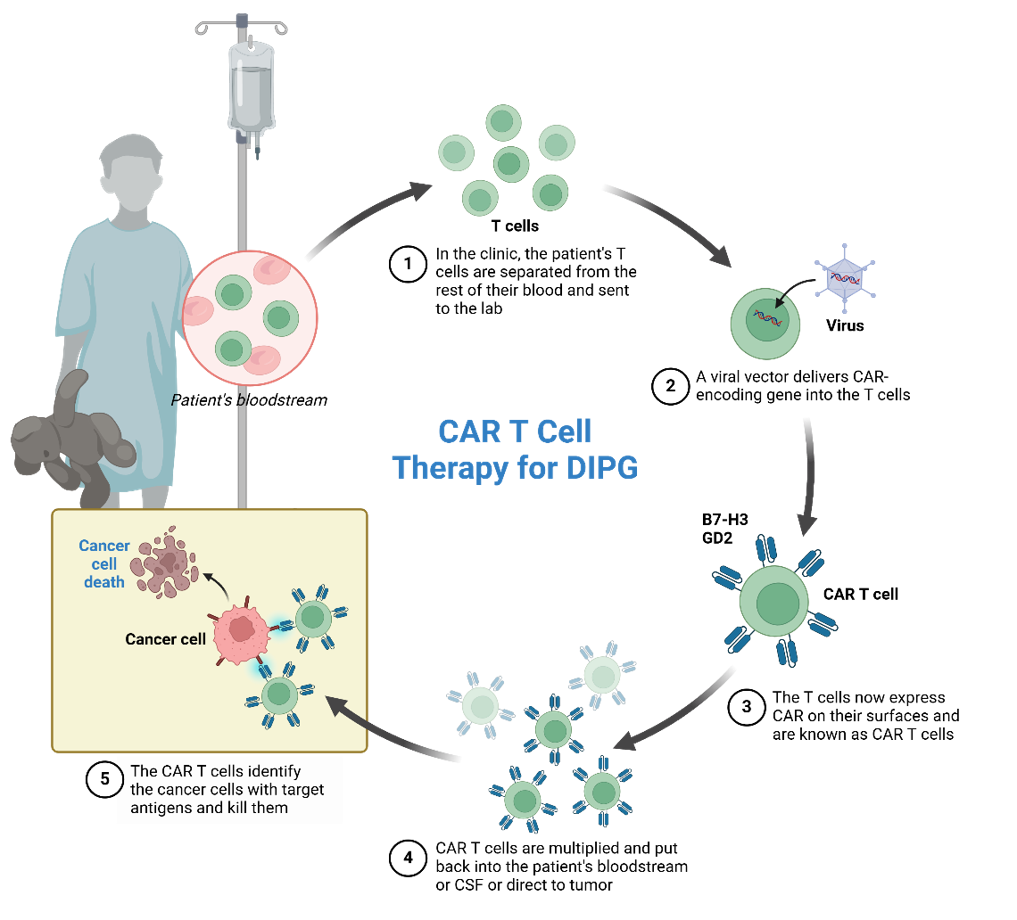
Diffuse intrinsic pontine glioma (DIPG), currently classified within diffuse pediatric-type highgrade gliomas, is one of the most aggressive pediatric brain tumors and is associated with an extremely poor prognosis despite advances in neuro-oncology. This review summarizes current knowledge regarding the molecular pathogenesis, diagnosis, standard treatment, and emerging therapeutic strategies for DIPG. Recent molecular studies have identified H3K27 alterations, including H3.3K27M, H3.1K27M, and EZHIP, together with abnormalities in TP53, PDGFRA, and ACVR1, as key drivers of tumor development and treatment resistance. Magnetic resonance imaging remains the cornerstone of diagnosis, while stereotactic biopsy has become increasingly important for molecular characterization and treatment planning. Radiotherapy remains the standard treatment, providing temporary clinical improvement, whereas the survival benefit of temozolomide remains limited. Novel therapeutic approaches, including chimeric antigen receptor (CAR) T-cell therapy, oncolytic virotherapy, survivin peptide vaccination (SurVaxM), and immune checkpoint inhibitors, have demonstrated encouraging preliminary results in early-phase studies. Although these emerging therapies offer promising opportunities for improving outcomes, further translational research and well-designed clinical trials are required to establish their long-term efficacy and safety and to develop more effective personalized treatment strategies for patients with DIPG.
Downloads
References
Fonseca A, Afzal S, Bowes L, Crooks B, Larouche V, Jabado N, et al. Pontine gliomas: a 10-year population-based study: a report from the Canadian Paediatric Brain Tumour Consortium (CPBTC). J Neurooncol. 2020;149(1):45–54. doi: 10.1007/s11060-020-03568-8.
Cohen KJ, Jabado N, Grill J. Diffuse intrinsic pontine gliomas—current management and new biologic insights. Is there a glimmer of hope? Neuro Oncol. 2017;19(8):1025–34. doi:10.1093/neuonc/nox021.
Hassan H, Pinches A, Picton SV, Phillips RS. Survival rates and prognostic predictors of high-grade brain stem gliomas in childhood: a systematic review and meta-analysis. J Neurooncol. 2017;135(1):13–20. doi:10.1007/s11060-017-2546-1.
Mackay A, Burford A, Carvalho D, Izquierdo E, Fazal-Salom J, Taylor KR, et al. Integrated molecular meta-analysis of 1,000 pediatric high-grade and diffuse intrinsic pontine glioma. Cancer Cell. 2017;32(4):520–37.e5. doi:10.1016/j.ccell.2017.08.017.
Weisbrod LJ, Thiraviyam A, Vengoji R, Shonka N, Jain M, Ho W, et al. Diffuse intrinsic pontine glioma (DIPG): a review of current and emerging treatment strategies. Cancer Lett. 2024;590:216876. doi:10.1016/j.canlet.2024.216876.
Gallitto M, Lazarev S, Wasserman I, Stafford JM, Wolden SL, Terezakis SA, et al. Role of radiation therapy in the management of diffuse intrinsic pontine glioma: a systematic review. Adv Radiat Oncol. 2019;4(3):520–31. doi:10.1016/j.adro.2019.03.009.
Recinos PF, Sciubba DM, Jallo GI. Brainstem tumors: where are we today? Pediatr Neurosurg. 2007;43(3):192–201. doi:10.1159/000098831.
Leach JL, Roebker J, Schafer A, Baugh J, Chaney B, Fuller C, et al. MR imaging features of diffuse intrinsic pontine glioma and relationship to overall survival: report from the International DIPG Registry. Neuro Oncol. 2020; 22(11):1647–57. doi:10.1093/neuonc/noaa140.
Sheikh SR, Patel NJ, Recinos VMR. Safety and technical efficacy of pediatric brainstem biopsies: an updated meta-analysis of 1000+ children. World Neurosurg. 2024;189:428–38.e2. doi:10.1016/j.wneu.2024.06.163.
Hamisch C, Kickingereder P, Fischer M, Simon T, Ruge MI. Update on the diagnostic value and safety of stereotactic biopsy for pediatric brainstem tumors: a systematic review and meta-analysis of 735 cases. J Neurosurg Pediatr. 2017;20(3):261-8. doi:10.3171/2017.2.EDS1665.
Dalmage M, LoPresti MA, Sarkar P, Ranganathan S, Abdelmageed S, Pagadala M, et al. Survival and neurological outcomes after stereotactic biopsy of diffuse intrinsic pontine glioma: a systematic review. J Neurosurg Pediatr. 2023;32(6):665–72. doi:10.3171/2023.7.PEDS22462.
Shi S, Lu S, Jing X, Liao J, Li Q. The prognostic impact of radiotherapy in conjunction with temozolomide in diffuse intrinsic pontine glioma: a systematic review and meta-analysis. World Neurosurg. 2021;148:e565–71. doi:10.1016/j.wneu.2021.01.024.
Van Gool SW, Makalowski J, Fiore S, Sprenger T, Prix L, Schirrmacher V, et al. Randomized controlled immunotherapy clinical trials for GBM challenged. Cancers (Basel). 2021;13(1):32. doi: 10.3390/cancers13010032.
Zaghloul MS, Eldebawy E, Ahmed S, Mousa AG, Amin A, Refaat A, et al. Hypofractionated conformal radiotherapy for pediatric diffuse intrinsic pontine glioma (DIPG): a randomized controlled trial. Radiother Oncol. 2014;111(1):35–40. doi: 10.1016/j.radonc.2014.01.013.
Izzuddeen Y, Gupta S, Haresh KP, Sharma D, Giridhar P, Rath GK. Hypofractionated radiotherapy with temozolomide in diffuse intrinsic pontine gliomas: a randomized controlled trial. J Neurooncol. 2020;146(1):91–5. doi:10.1007/s11060-019-03340-7.
Das AK, Sinha M, Singh SK, Chaudhary A, Boro AK, Agrawal M, et al. CAR T-cell therapy: a potential treatment strategy for pediatric midline gliomas. Acta Neurol Belg. 2024;124(4):1251-61. doi:10.1007/s13760-024-02519-8.
Porter DL, Levine BL, Kalos M, Bagg A, June CH. Chimeric antigen receptor-modified T cells in chronic lymphoid leukemia. N Engl J Med. 2011;365(8):725–33. doi:10.1056/NEJoa1103849.
Haydar D, Houke H, Chiang J, Yi Z, Odé Z, Caldwell K, et al. Cell-surface antigen profiling of pediatric brain tumors: B7-H3 is consistently expressed and can be targeted via local or systemic CAR T-cell delivery. Neuro Oncol. 2021;23(6):999–1011. doi:10.1093/neuonc/noaa278.
Donovan LK, Delaidelli A, Joseph SK, Bielamowicz K, Fousek K, Holgado BL, et al. Locoregional delivery of CART cells to the cerebrospinal fluid for treatment of metastatic medulloblastoma and ependymoma. NatMed.2020;26(5):720–31. doi:10.1038/s41591-020-0827-2.
Jaiswal PK, Goel A, Mittal RD. Survivin: a molecular biomarker in cancer. Indian J Med Res. 2015;141(4):389–97.doi:10.4103/0971-5916.159250.
Fenstermaker RA, Ciesielski MJ, Qiu J, Yang N, Frank CL, Lee KP, et al. Clinical study of a survivin long peptide vaccine (SurVaxM) in patients with recurrent malignant glioma. Cancer Immunol Immunother. 2016;65(11):1339–52. doi:10.1007/s00262-016-1890-x.
Cacciotti C, Choi J, Alexandrescu S, Zimmerman MA, Cooney TM, Chordas C, et al. Immune checkpoint inhibition for pediatric patients with recurrent/refractory CNS tumors: a single institution experience. J Neurooncol. 2020; 149(1):113–22. doi:10.1007/s11060-020-03578-6.
Downloads
Published
How to Cite
Issue
Section
License
Copyright (c) 2026 Thai Journal of Neurological Surgery

This work is licensed under a Creative Commons Attribution-NonCommercial-NoDerivatives 4.0 International License.
Articles in this journal are copyrighted by the x may be read and used for academic purposes, such as teaching, research, or citation, with proper credit given to the author and the journal.use or modification of the articles is prohibited without permission.
statements expressed in the articles are solely the opinions of the authors.
authors are fully responsible for the content and accuracy of their articles.
other reuse or republication requires permission from the journal."


